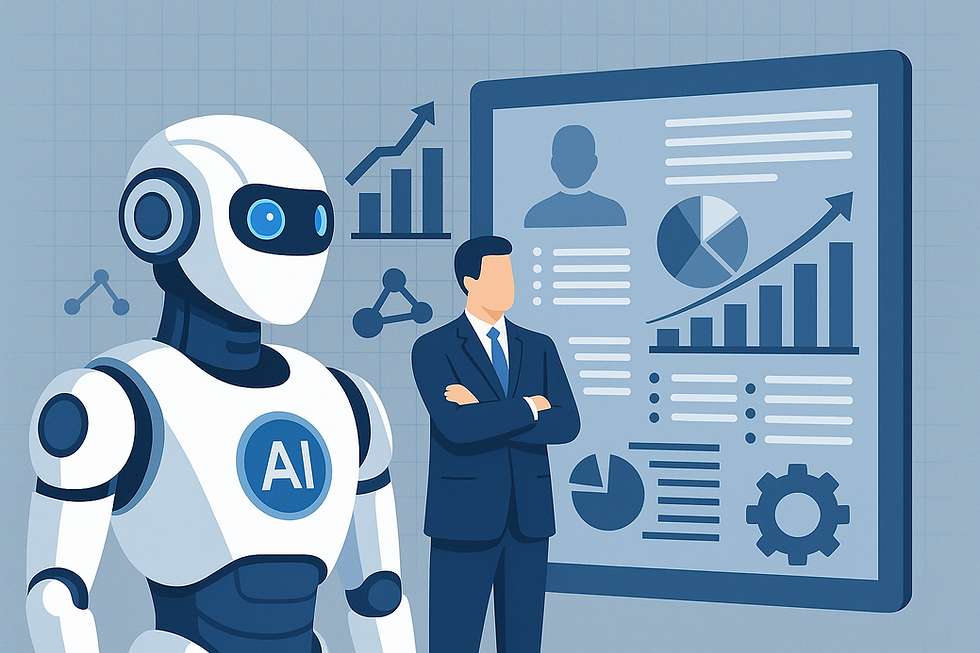
Emotional Intelligence vs. Artificial Intelligence: Leading with Empathy in a Robotic Age
As artificial intelligence reshapes industries, workflows, and corporate roles, a growing misconception is taking hold: that emotional intelligence will become less important in a world run by machines. In reality, the opposite is true. As AI handles routine and analytical tasks with increasing speed and precision, the uniquely human capacity for empathy, trust-building, and relational leadership becomes more critical than ever.
In a robotic age, emotionally intelligent leadership is no longer a soft skill but a strategic necessity.
The Empathy-AI Divide
AI excels at data processing, prediction, and consistency. But it lacks self-awareness, intuition, and emotional depth. Bots cannot understand frustration, interpret tone in context, or navigate moral ambiguity. As AI becomes integrated into the workplace, it creates emotional gaps—moments where machines can execute but not relate. Leaders must step into these gaps.

This shift demands a return to the foundational human aspects of leadership:
Empathetic listening
Building psychological safety
Navigating conflict and ambiguity
Creating inclusive, purpose-driven cultures
Let’s examine three sectors where this human-AI tension is playing out: education, mental health, and HR technology.
Case Study: Education — AI Tutoring Platforms
AI tools like Khanmigo (Khan Academy), Duolingo’s AI tutor, and ChatGPT-enabled learning assistants are transforming education. These platforms offer personalized feedback, adaptive lessons, and 24/7 availability. They are especially powerful for rote subjects like math, grammar, and vocabulary.
Emotional Intelligence Gap:
AI tutors can’t detect when a student is anxious, ashamed, or overwhelmed.
They don’t celebrate small victories or empathize with learning disabilities.
Leadership Implication:
School leaders and education administrators must train teachers not just to deliver content but to provide emotional support and encouragement. The role of the teacher evolves into coach, mentor, and safe space provider.
Strategic Actions:
Redesign curricula to focus human effort on relational learning.
Empower educators with training in trauma-informed teaching and emotional literacy.
Encourage hybrid models: AI for structure, humans for support.
Case Study: Mental Health — Chatbots vs. Therapists
Mental health apps like Woebot and Wysa use AI to deliver Cognitive Behavioral Therapy (CBT) techniques. These tools can detect negative thought patterns, offer reframing prompts, and track mood changes over time. They are scalable and accessible.
Emotional Intelligence Gap:
Bots can simulate empathy but can’t truly feel it.
In crisis scenarios, bots often fall short in nuance and human connection.
Leadership Implication:
Mental health providers must balance AI scalability with human touch. Leaders in clinics and therapy practices need to establish protocols: when is AI appropriate, and when must a human step in?
Strategic Actions:
Define triage frameworks to escalate from AI to human professionals.
Train human therapists in digital empathy and telehealth communication.
Use AI as augmentation, not replacement.
Case Study: HR Tech — AI Recruiting Tools
AI tools like HireVue, Pymetrics, and Eightfold AI are reshaping talent acquisition. They scan resumes, conduct video interviews, and assess skills using data-driven algorithms.
Emotional Intelligence Gap:
Candidates often feel dehumanized by algorithmic screening.
Bots may miss contextual brilliance (e.g., a gap year due to caregiving).
Leadership Implication:
HR leaders must ensure fairness, transparency, and a human-centered candidate experience. Leaders must also coach hiring managers on bias, communication, and emotional engagement.
Strategic Actions:
Reintroduce human checkpoints in the hiring process.
Share AI usage disclosures with candidates to build trust.
Equip recruiters to interpret AI insights through a human lens.
Why Empathy Is Now a Competitive Advantage
Organizations with emotionally intelligent leaders will outperform their peers in:
Retention: Employees stay when they feel seen and valued.
Innovation: Psychological safety enables creative risk-taking.
Customer Experience: Empathetic leadership models flow downstream to client interactions.
Crisis Response: Leaders who manage fear and ambiguity foster resilience.
Empathy is not a liability in an AI era. It’s the differentiator that machines cannot replicate.
Key Emotional Intelligence Traits for Modern Leaders
1. Self-Awareness
Understand your emotional triggers and biases. This allows you to model calm, thoughtful leadership even when technology fails or changes rapidly.
2. Empathy
Tune into both verbal and non-verbal cues. In hybrid work and AI-integrated environments, emotional literacy helps leaders notice stress, confusion, or disengagement.
3. Adaptability
AI will change workflows frequently. Leaders must navigate change with empathy, listening to concerns and helping teams transition with clarity and compassion.
4. Inclusive Communication
AI systems can unintentionally reinforce exclusion. Leaders must create inclusive spaces where every voice matters—and model that behavior.
5. Resonance
Great leaders move people emotionally. This ability to inspire, unite, and motivate will become rarer—and more valuable—as digital communication and automation rise.
The Neuroscience Behind Empathy in Leadership
Empathetic leadership is not just feel-good philosophy. Studies in neuroscience show that:
Empathy activates mirror neurons, fostering connection.
Psychological safety boosts oxytocin, increasing collaboration.
Authentic leadership lowers cortisol in teams, reducing burnout.
When leaders show care, it literally changes team chemistry. This is something bots can never do.
The Future of Empathy at Work
In AI-heavy workplaces, emotionally intelligent leaders will serve as:
Cultural anchors: Preserving humanity in digital ecosystems.
Change translators: Bridging emotional impacts during transformation.
Trust builders: Creating safe environments amid uncertainty.
Purpose cultivators: Helping people see their value beyond productivity metrics.
These roles become more—not less—important in an automated world.
Conclusion
Artificial intelligence may reshape what work looks like. But emotional intelligence will determine how that work feels.
In the robotic age, empathy becomes a leadership superpower. It sustains trust, fosters loyalty, and humanizes systems that risk becoming soulless. The most successful leaders will not be those who master machines, but those who master connection.
This is the fourth article in our series “Leadership in the Age of AI Bots.” In the next installment, we’ll tackle performance management in bot-human teams: how do you measure, review, and optimize a workforce where some employees are made of code?
Let’s talk leadership. How are you navigating the human side of AI transformation? Share your experiences or message me directly.