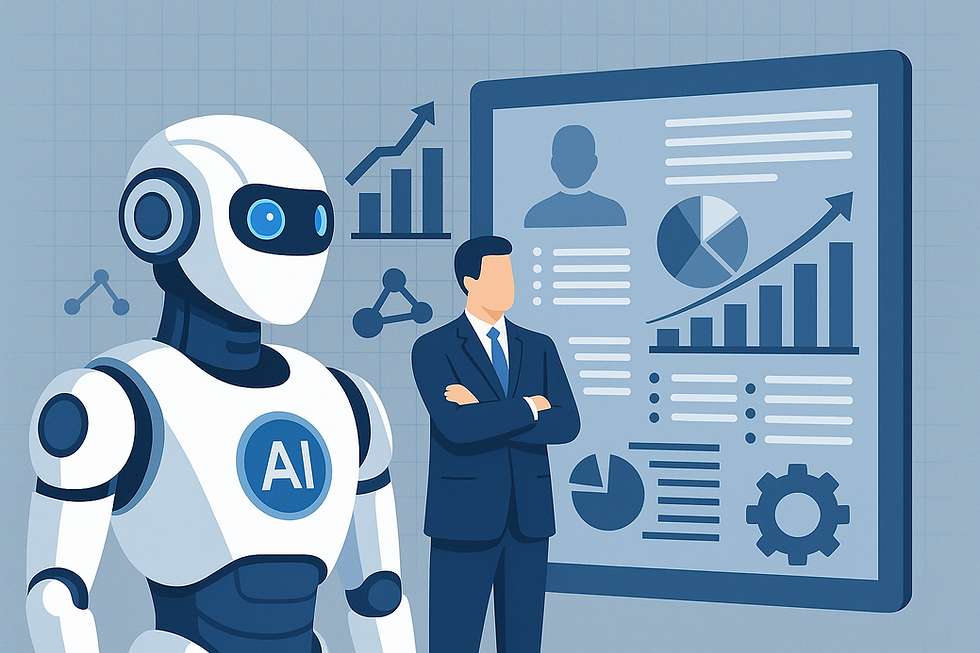
Man With Machine: Rethinking Leadership in a Bot-Human World
In a world accelerating toward digitization and AI embedded in every facet of life, the very nature of leadership is undergoing a profound transformation. As artificial intelligence, digital agents, and autonomous systems move from experimental pilots to fully integrated parts of the workforce, the traditional model of leadership—rooted in the ability to inspire, motivate, and manage people—no longer suffices.

We are now entering a new era: one in which leaders must not only guide human teams but also oversee non-human agents. This shift isn’t simply a technological update. It demands a wholesale rethinking of organizational design, ethics, communication, accountability, and performance. In this article, we’ll explore how leadership must evolve when your employees aren’t all human—and what that means for the future of work, corporate culture, and competitive strategy.
Leadership Was Built for People
Historically, leadership has been a human-to-human endeavor. Leaders were measured by their ability to:
Inspire people with a compelling vision.
Build trust and loyalty through emotional intelligence.
Motivate performance with coaching, feedback, and accountability.
Navigate complex team dynamics and organizational politics.
These attributes remain vital. But when a portion of your "team" is composed of generative AI bots, machine learning systems, or robotic process automation tools, the demands of leadership multiply—and diversify.
Welcome to the Hybrid Workforce
In today’s forward-leaning organizations, bots are already active team members. They answer customer questions, process data, write code, and even generate marketing content. They're not just tools, they're participants in core workflows, capable of influencing outcomes, productivity, and drive customer experience.
Let’s look at three industries already seeing these shifts:
1. Customer Service
In customer service, AI-powered bots handle thousands of interactions daily. Companies like American Express and H&M use chatbots to resolve customer issues, route inquiries, and collect feedback. These bots operate 24/7, scale effortlessly, and deliver consistent answers.
Implication for Leaders:
Leaders must now oversee performance metrics not just for agents, but for bots: response accuracy, escalation rates, and customer sentiment post-interaction. Leaders must also train teams to work with bots—knowing when to hand off and when to intervene. Bot fluency becomes a core leadership competency.
2. Healthcare
In hospitals and clinics, AI systems assist in diagnostics, analyze imaging scans, and predict patient deterioration. While doctors and nurses remain indispensable, these systems increasingly shape care decisions.
Implication for Leaders:
Clinical leaders must ensure AI is used ethically, understand its limitations, and design human-AI collaboration that protects patients and empowers staff. Leadership now involves managing liability, data integrity, and trust in technology—issues that were previously delegated to IT.
3. Logistics and Supply Chain
In global logistics, bots forecast demand, reroute shipments, optimize warehouse layouts, and monitor fleet performance in real time. DHL, Amazon, and Maersk all use AI to drive efficiency.
Implication for Leaders:
Operational leadership shifts from reactive firefighting to predictive oversight. Leaders now need to interpret AI-driven insights, challenge biased algorithms, and build cross-functional coordination between digital systems and human logistics managers.
Redefining Leadership: Five New Responsibilities
Algorithmic Accountability
A bot can make decisions—but a human must be accountable. Leaders must understand how AI tools reach conclusions, advocate for transparency, and ensure regulatory compliance. This isn’t a technical role, it’s a leadership imperative.
Orchestrating Human-AI Collaboration
Great leaders will design workflows that optimize the strengths of both humans and machines. This means understanding how to structure teams where AI handles routine or analytical tasks while humans focus on empathy, strategy, and creativity.
Performance Management for Bots
If a bot's performance declines—due to outdated data, flawed training, or algorithmic drift—how is that addressed? Leaders must integrate bot performance reviews, lifecycle management, and AI audits into their leadership practices.
Cultural Integration
Bots can disrupt team morale if seen as replacements rather than collaborators. Leaders must shape narratives around augmentation, not obsolescence, and maintain trust, purpose, and inclusion across human teams.
Digital Ethics and Stewardship
With bots come ethical dilemmas: bias in algorithms, privacy risks, and opaque decision-making. Leaders must champion responsible AI use, create ethical guardrails, and lead by example in data stewardship.
The Psychological Shift for Leaders
Perhaps the most profound challenge is psychological. Leaders must expand their mindset: from being motivators of people to being orchestrators of intelligent systems. They must let go of control in some areas and embrace a more facilitative, systems-thinking approach.
It’s no longer about managing effort—it’s about managing intelligence, human and artificial alike.
What This Means for Your Organization
Whether you're a startup founder or a Fortune 500 executive, this transformation is not optional. Companies that reframe leadership for the bot-human era will:
Outperform peers in agility, efficiency, and scalability.
Attract AI-native talent and customers seeking innovation.
Build cultures of trust, learning, and ethical leadership.
Those who don’t will find themselves managing outdated hierarchies, misaligned incentives, and eroding relevance.
What’s Next: A Series on AI-Integrated Leadership
This article kicks off a broader series titled "Leadership in the Age of AI Bots"—an exploration of the new leadership landscape in bot-driven organizations.
Here’s what’s coming:
Redefining Leadership in a Bot-Human Workplace
Who’s Responsible? Accountability in the Age of Autonomous Agents
Empathy Meets Algorithms: Leading with Emotional Intelligence in an AI World
Bot Performance Reviews: KPIs, Bias, and Optimization
Culture, Trust, and Morale When Bots Join the Team
The Rise of the AI Chief of Staff: Executive Support in the Machine Era
Sector Spotlights: How Leadership is Transforming Across Industries
Integrating Bot-Aware Leadership into Business Strategy
Rewriting the Playbook: Talent, Promotion, and the New Management Model
The Future Differentiator: How Bot Leadership Will Reshape Entire Industries
If you’re leading a team, a business, or an entire industry—now is the time to evolve your thinking. Because in this new era, your bots are employees. And leadership is no longer just about humans.
Let’s start a conversation.
How is your organization preparing for AI-integrated leadership? Message me or comment below, I'd love to hear from you.